Breaking the black box: an interpretable machine learning model for global terrorism forecasting

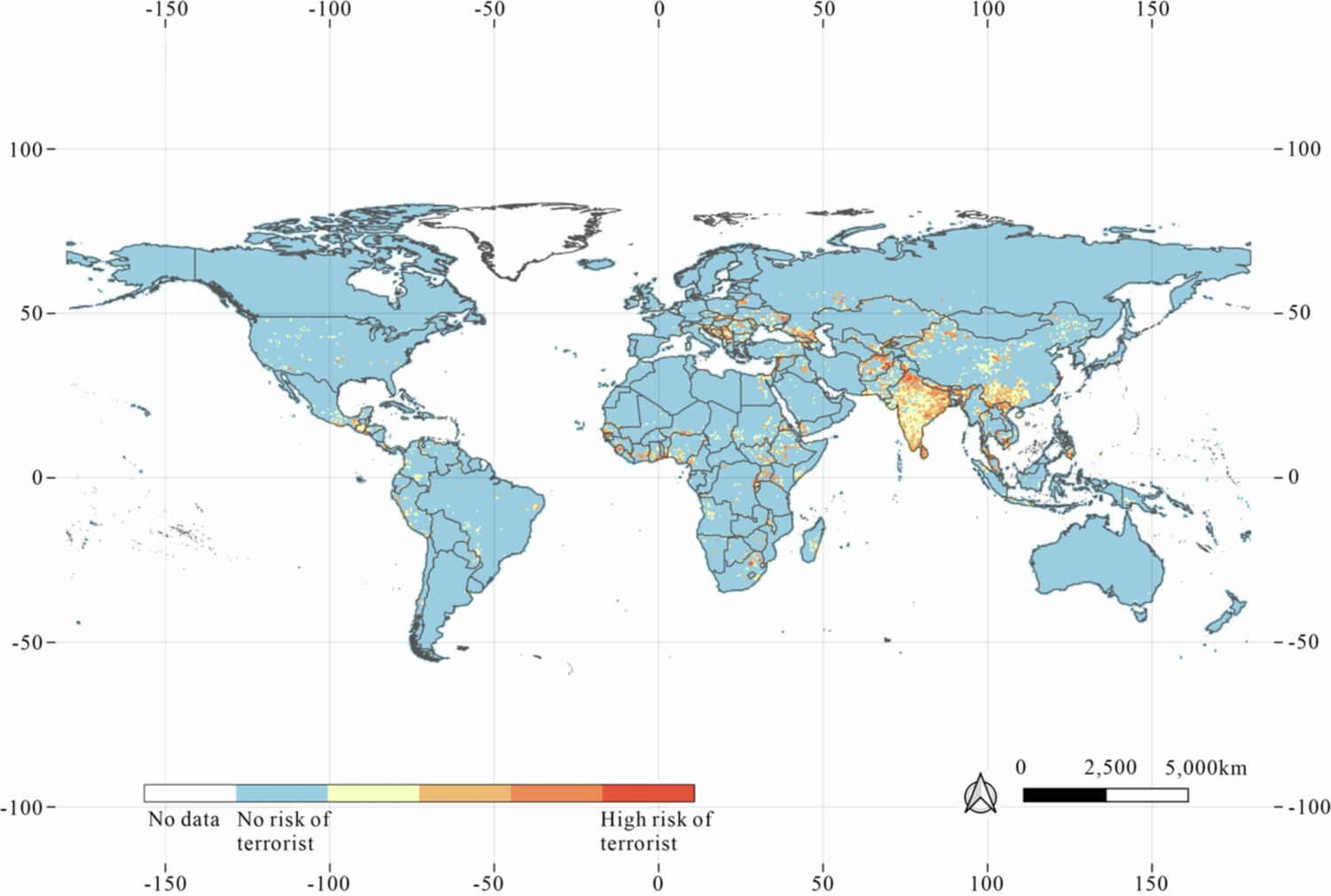
Terrorist attacks significantly threaten a nation’s stability, prosperity, and social cohesion. Therefore, predicting terrorist attacks and identifying their underlying drivers are crucial for formulating effective counterterrorism strategies. Existing studies often prioritize either temporal or spatial dimensions, while their interplay and specific socioeconomic drivers are less explored. In this study, global news data are leveraged to construct a novel global conflict index (GCI), which integrates multisource datasets to comprehensively characterize the key drivers of terrorist attacks. TerrorXG is proposed to predict terrorist attacks, and SHAP analysis is applied to quantitatively interpret the importance and contributions of the driving factors. TerrorXG demonstrated superior performance (RMSE: 0.319; PCC: 0.777) and high computational efficiency. Compared with the second most influential factor (population size), the proposed GCI has a 42.4% greater impact on terrorist attacks. The interpretability analysis of the model highlights socioeconomic inequality as a primary determinant: the impacts of child malnutrition and infant mortality are 38.4% to 108.5% greater than the effect of urbanization. The influence of ethnicity represents only 9.7% of the impact of the GCI, providing empirical evidence that challenges traditional theoretical perspectives on ethnic conflict in terrorism research. This study provides valuable insights for optimizing the allocation of counterterrorism resources.


MGIM: Masked Geo-Inference for Land Parcels

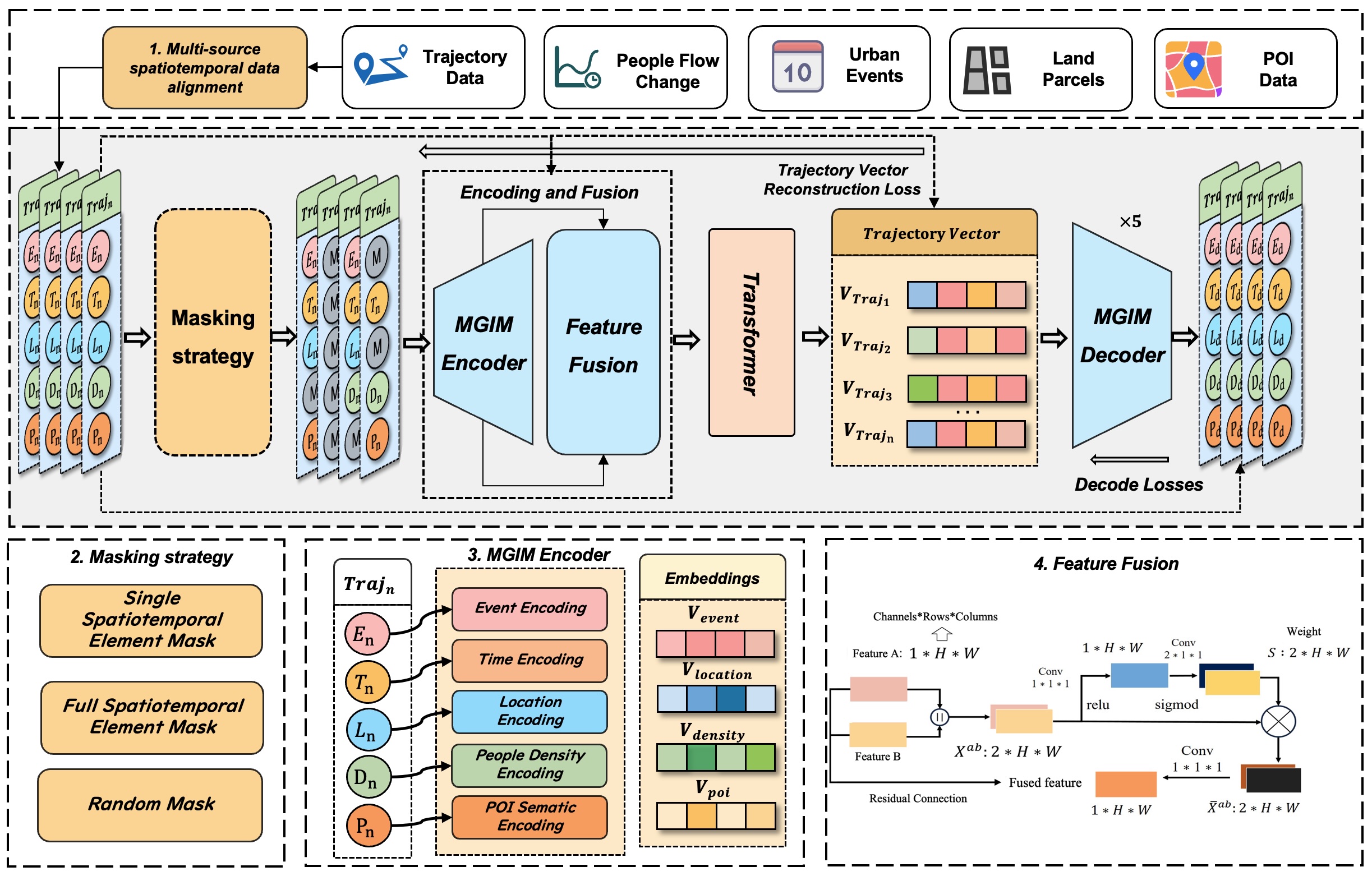
Effective modeling of spatio-temporal contexts to support geographic reasoning is essential for advancing Geospatial Artificial Intelligence. Inspired by masked language models, this paper introduces the Masked Geographical Information Model (MGIM), a novel self-supervised framework for learning context-aware representations from multi-source spatio-temporal data. The framework’s core innovations include a parcel-scale method for multi-source data fusion and a custom self-supervised masking strategy for diverse geographic elements. This integrated modeling approach enables the model to capture complex spatio-temporal relationships and achieve consistently strong performance across diverse geographic reasoning tasks, such as trajectory inference, people flow inference, event identification, and land parcel function analysis. MGIM accurately reasons from spatio-temporal contexts and dynamically adjusts inferences according to contextual changes. The visualization of attention mechanisms further illustrates MGIM’s capacity to construct contextually-aware representations and task-specific attention patterns analogous to natural language processing models. This study presents a new paradigm for general-purpose spatio-temporal modeling in real-world geographic scenarios, offering significant theoretical and practical value, and promising an effective solution for building a geographic foundation model.